Monday, 7 September 2015

Stronger Than Hate

The history of humanity seems to be defined by human eyes 

looking away... 

Looking away from dead bodies floating in the water, 

Looking away from p
eople trapped in steel cans, 


Looking away from dead bodies, 

Looking away from people turned to blood and bone, 


Looking away from people turned smoke and dust

Looking away, looking away from dead bodies... 


Always we look away, turn away, go on with our day, 


Guard jealously our plate...leave them to their fate... 


Let's leave them to their fate, 


They died long before, 


Long before their breathing ceased,

Long before their blood was shed,

Long before the bombs and the fire,

Long before the waters bore them away,


They died from indifference much stronger than hate.


Wednesday, 15 July 2015

My Argument Proposing the Motion to End Aid to Africa

(So I am going to be doing this in the format of my old primary and secondary school debates. I will not start with ‘Good day’ however, because Mr Olasehinde said it sounds rude!)

Hello my fellow Africans, valued (so not!) statesmen, honourable(?) financial analysts impeccable (cough, cough!) policy makers and the esteemed citizens of the world (audience). I am here to propose the motion that no aid should be sent to Africa, from this day forward, forever, amen. My points are as follows:

Great men, like Albert Einstein, Benjamin Franklin and David Boswell, have been attributed with the honour of defining insanity as ‘doing the same thing over and over and expecting different results.’ Irrespective of who said it, at the core of the statement lies a truism. Since circa 1960 and the creation of African states in an arbitrary and haphazard manner, that disregarded the needs and desires of the African people, aid has poured into the continent like water into a basket. He who pours water into a basket shows where exactly his level of common sense lies. There has not been a proven empirical link between aid and growth/development. No African state can be proven to have developed strictly because of the aid received.

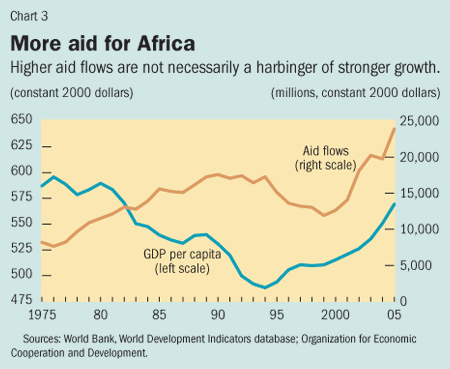
The purposes of giving aid have always been dubious. During Nigeria’s civil war, it has been stated that the aid given to Biafra extended the length of the conflict for over a year, thereby increasing the number of dead and wounded. The activities of aid agencies in the continent are hardly ever in concert with actual development. The proportion of overall aid dedicated to technical assistance, emergency food and health aid, as well as debt forgiveness, is relatively low. These forms of aid are logical in the short term. However, project and program aid has not been shown to make a massive difference to the lives of African people. In actual fact, as the amount of aid started dropping due to the financial crisis in Europe and America, the GDP of African countries began to increase. There has to be a systematic reduction in health aid, coupled with technical assistance that leads to an infrastructural improvement in African states.


Let’s move to the structural adjustment programs of the 1990s, when we all joked that life was being SAPped out of us. Do you remember? The IMF and World Bank programs caused a lot of suffering in many African nations, slashing spending on health care, education and agriculture. Were these cuts meant to be made up by aid? Any solution that ignores the root cause and logic is no solution at all.

Rather than aid, governments of developed countries should make policy changes to enhance African development. John Hilary, executive director of War on Want, cites trade liberalisation policies that subject firms in poor countries to competition they cannot handle and tax loopholes that allow firms to minimise payments to developing countries. Dani Rodrik, the development economist, says rich countries should pursue a "do no harm" approach with policies that include carbon taxes and other measures to ameliorate climate change; more work visas to allow larger temporary migration flows from poor countries; strict controls on arms sales to developing nations; reduced support for repressive regimes; and improved sharing of financial information to reduce money laundering and tax avoidance. Note that some aid is actually in the form of loans that contribute to Africa’s debt crisis. Basically give 1 carrot with the left hand and collecting 2 with the right hand.

Secondly, the Wolof of Senegal say that ‘a dish which is going to be tasty will smell good when it boils.’ However, the stench of aid clings to Africa like a beggars rags. I heard someone say something on TV in the UK implying that Africans should have picked themselves up after all the money she has given us. The Yoruba people say that it is for the day of trouble that each person has a unique name. I would have like to have told that woman that no aid had ever come to me. Let’s take a few examples of where aid actually goes…

Aid to Morocco was used to fund L’Oasis de Noria – a vast £60million holiday complex comprising a lagoon complete with waves, a golf course, almost 1,000 apartments and villas. £800,000 was given by EuropeAid, which Britain significantly funds.
Yegna, a girlband dubbed the Ethiopian ‘Spice Girls’, was given £3.8m by the UK Department for International Development.
Iraq receives the largest proportion of US aid.

Due to the greed and therefore corruption of many African leaders, a large proportion of aid goes missing. Conclusively, aid hardly enriches the lives of a large proportion of Africans, most especially, those who need it. If aid were not given, the lazybones leaders who are waiting for handouts, will make something of their countries and actually make more money. Idiots!

Thirdly, the Somalis say that ‘Bad counsel may cause you to fall into an abyss.’ The motivation for giving aid by developed countries is questionable and the statistics upon which the motivation is based is unverifiable. The British PM said that if aid is not given ‘the problems of conflict, the problems of mass migration, the problems of uncontrollable climate change are problems that will come and visit us at home.’ Again, this motivation has proved futile as, African migration via the Mediterranean has reached a high in 2015.

We can look back through African history as to how aid has been used. Let us go to 1958. When General Charles de Gaulle assumed supreme power in 1958, an independence referendum was held in the African colonies. Guinea-Conakry alone voted for independence; France responded by granting Guinea independence in 1958 but withdrawing its officials and its financial aid.

The reluctance to grant aid is also worrisome. Since 1970, when the world’s rich countries agreed to give 0.7% of their Gross National Income as aid yearly, targets are rarely met. The US is often the largest donor in monetary terms, but ranks amongst the lowest in terms of meeting the 0.7% target. The Ethiopians say ‘A bird hanging between two branches will get bitten on both wings.’ You either give aid or you do not. You either give for the right reasons, or you do give at all. (See my carrot and hand analogy above.)


Fourthly, while the percentage amount of aid is negligible, the fact of aid confirms Africans (and therefore black people) as helpless and subhuman in many people minds. This feeds into the intractableness of racism in the world today. British politician, Peter Mandelson said that aid has ‘demeaned many African governments by turning them into professional beggars.’ Every aid advert on television is accompanied by bony African children, with flies on their eyeballs. For many, many people, these are the only Africans they will ever see.

Now let’s look at colonialism. The colonial powers managed to convince themselves that they were subjugating Africans (and others) for their own good. European violence was going to stop the wars endemic to Africa, and their enlightened (over-)rule would be to the benefit of all. (Sound familiar?) Enough is enough. E don do!

The Ewe of Ghana say that ‘a beggar can beg for certain things but cannot beg for an ostrich's egg.’ Our self-worth cannot be maintained while presidential begging subsists. The Fulani of West Africa say that ‘He who gallops the horse of greed arrives at the door of shame.’ The horse of aid will only lead Africa to more shame. The Swahili say that ‘when the crocodile smiles, you should be extra careful.’ Collecting aid is no aid.


The Akan of Ghana say that ‘When you grab the head of a snake, the rest is mere rope.’ This problem and the solution is in African hands. African can and should care for itself. Africa has 58 countries and 1 billion people. Now I am going to give you some critical information.

The export of African forest products from Cameroon, Central African Republic, Republic of the Congo, Democratic Republic of the Congo, Gabon, and Equatorial Guinea, brings in significant revenue. Africa’s fishing industry, mainly coastal West Africa, Namibia and South Africa, provides income to more than 10 million people and has an annual export value of $2.7 billion. African inland fisheries contain more than 3,000 fish species and account for two-thirds of global inland fish production. Lake Victoria is the most productive freshwater fishery in the world, producing more than 500,000 tons of fish worth $600 million every year. Africa’s agricultural products include cocoa (which alone accounts for 70% of the continent’s agricultural exports), coffee, tea, cotton, sugar, pineapple and bananas. Over the period of 2000 to 2011, West Africa recorded a large trade surplus of coffee, tea, cocoa and spices, which rose from just below US$ 2.5 to 7.5 billion. However, African products are largely unprocessed products (less than 6% of African cotton is processed, and only 25% of cocoa), as most of the processing is done in importing countries.


In 2008, Africa produced about 483 tons of gold, or 22 percent of the world’s total production. South Africa accounts for almost half of Africa’s gold production. Ghana, Guinea, Mali, and Tanzania are other major producers of gold. In 2008, the continent produced 55 percent of the world’s diamonds. Botswana, Angola, South Africa, the Democratic Republic of the Congo, and Namibia are Africa’s largest producers of diamonds. In 2007, the continent produced 12.5 percent of the world’s total oil production and 6.45 percent of the world’s total natural gas production. Nigeria, Libya, Algeria, Egypt, and Angola dominate Africa’s oil industry.


The Aswan Dam, a complex of two dams in Aswan, Egypt, captures the world’s longest river, the Nile, in the world’s third-largest reservoir, Lake Nasser. The Aswan High Dam, the newer and larger of the two dams, produces more than 10 billion kilowatt-hours of electricity every year, enough power for about 15 percent of the country. Lagos is Africa’s second most-populous city, with a population of about 10.2 million people. Lagos is growing 10 times faster than New York City, New York, or Los Angeles, California, in the United States. The United Nations estimates that Lagos will be one of the largest megacities in the world by 2015.


The Cold War illustrated that whoever controlled Africa, controlled the world. China’s association with Africa attracts caution, for this reason. Despite its resources, with the exception of cocoa, for which Africa is the main producer, the continent is unable to influence international prices (price taker). Imported products represent 1.7 times the value of exports. Exportation is actually done at a loss, which is why dependence on aid is required. According to the World Bank, just 5% of Africa’s cereal imports come from other African countries. It is estimated that more than 60% of the world’s available and unexploited cropland is located in sub-Saharan Africa. Africa can feed the world.

Africa and its countries need to look inwards. Africa needs to close its borders to resources. Nothing comes in, nothing goes out… for 5 years. During that time all Africa’s resources should be used to develop Africa and Africa only. While human resources cannot be conscripted, the more Africans who dedicate their time and skill to this project, the better. ‘When there is no enemy within, the enemies outside cannot hurt you.’

The Setswana of Botswana say that ‘life, like a wheel, turns.’ Africa can develop and turn poverty into wealth.
We should also not ignore the good and beneficial teachings in our culture. As the Yoruba say. ‘If we stand tall it is because we stand on the backs of those who came before us.’
With these few (ahem) words of mine I hope I have been able to convince and not confuse you that Aid to Africa should stop now.

We are what we think
We are here!
We are proud!
We are free!
We are Africa!!!


Tuesday, 16 June 2015

My Second View of the #childnotbride Story: Professor W Soyinka's comments on The Nigerian Sexual Offences Bill 2015

I remember writing on this issues a few years ago. I am going to quote myself and the venerable Professor in the same post! yikes!
Foluke 2013: Child 'marriage' has been going on for ages, generations even. It has never needed legal validation so why seek it now? That is the question we should be asking ourselves. 
I start from the premise that contrary to public opinion, our politicians are EXTREMELY smart. They are so sharp, they can cut diamond. Let us never be in doubt about that. Calling them names like clueless and silly and idiot, points the finger back at ourselves while they laugh all the way to bank. So why were our politicians so eager to amend the age at which one can renounce Nigerian citizenship?
....
My conclusions therefore are as follows; there is a sinister reason behind this debate and we are being misdirected to look in the wrong direction. Secondly, children are being given out in marriage every day, to do something about it we need sustained protest and not the flash-in-the-pan antics that we are fond of adopting. Finally, let us be objective and reflective in our view of issues. Don’t always argue what your adversary wants you to argue, but look to the bigger picture, look through his eyes. Do not underestimate. Beware misdirection.

Soyinka 2015: 'Well, we understand ‘child’ as defined in most dictionaries. There is however also child as defined by the Nigerian legislature. This definition is contained in a prior Bill, sponsored, no less, by a notorious serial paedophile and cross-border sex trafficker, yet lawmaker – one Ahmed Yerima.

Does Yerima’s Bill, gleefully assented to by his peers, not simply vitiate this latter, supposedly humane concern for the protection of the child? Again, I confess to being only a ‘bloody layman’ in such matters.

However, reading both bills, it strikes me that all the new bill does is empower the clique of paedophiles. All you need do is ‘marry’ even a six-year old under any local laws, and do whatever you want with her. Through marriage, she is already an ‘adult’. Her ‘defiler’ is now fully protected by this law. She is not.'


Foluke 2015: Beware the magician-politician, he is smart, he will patiently outwait your amnesiac attention span, there is a plan more cunning than we can imagine. Nigeria belongs to her people, only if her people are brave and cunning enough to take her for the magician-politician, the master of misdirection! And please, please remember the voiceless and powerless children!


Thursday, 28 May 2015

The Silent Narrative of Race

Ludicrously, we have made race into the dominant narrative of our time.
It is an ironic narrative, because it is rarely spoken.
But it lurks in the crannies of our minds,
In the corners of our eyes,
Feasting on all that is insidious in our souls,
Its scaly fingers holding us back from embracing our complete humanity,
Its scraggy feet trampling on all that is humane within us.
Generations from now, when they have all turned brown,
Our children will look at us with scorn and derision,
And ask 'How could they think that the skin corrupts the soul?'
'How could they think, that the land of birth, deters doing wonders on earth?'
'How did they come this far from reality?'

Monday, 9 March 2015

What Women are Doing Around the World... today, yesterday, tomorrow?


Why I Am Not Celebrating International Women’s Day 2015

On the 8th of March 2015 the world celebrated International Women’s Day. I chose to mark the day rather than celebrate. ‘Why?’ you may well ask. Here is my answer:
As long as women still have to justify their existence as equal citizens of the world, I will not celebrate,
I will not celebrate till the Chibok girls are returned alive or dead,
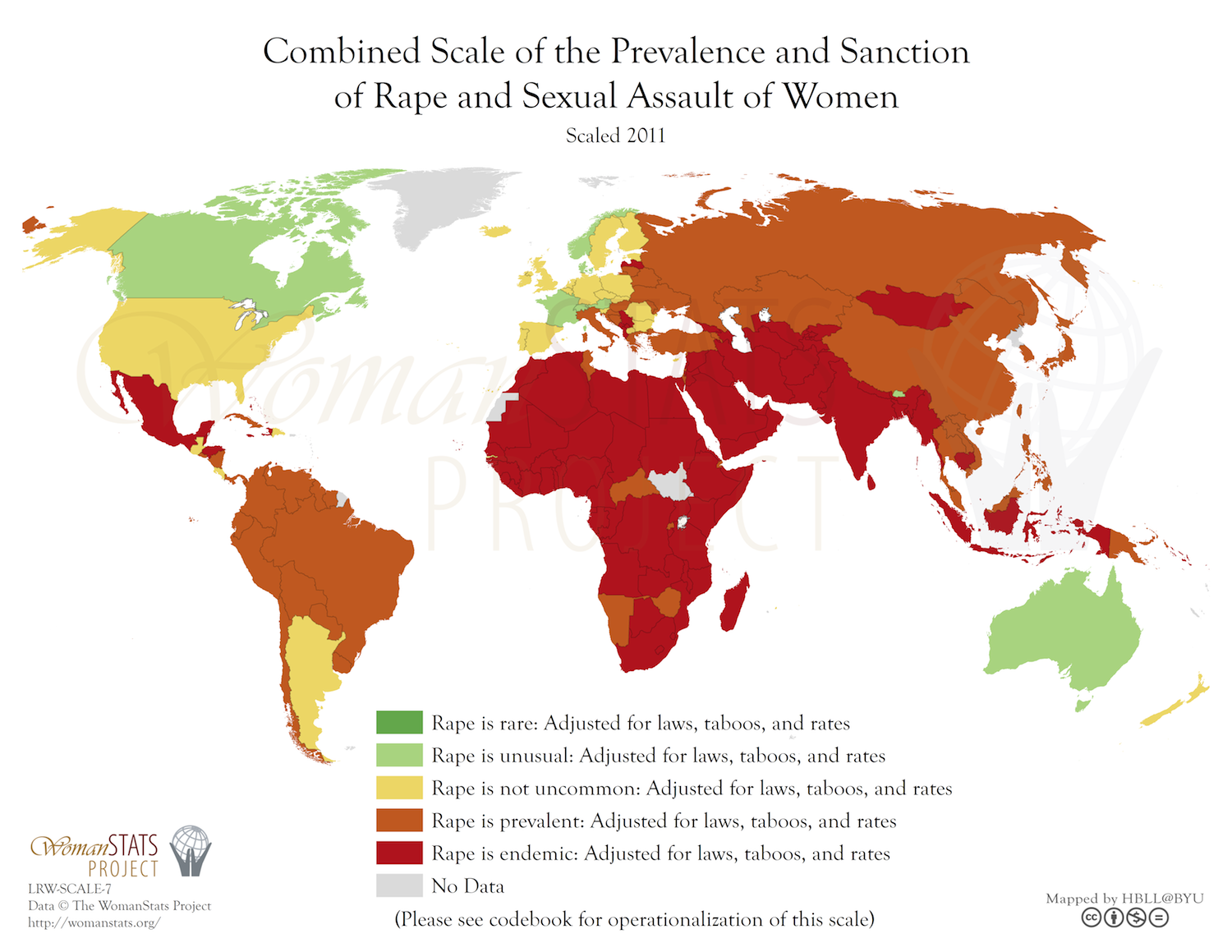
I will not celebrate while the rape of women is blamed on women and ‘India’s Daughter’ is banned,
I will not celebrate as long as domestic abuse is rampant and victim-blaming is ‘normal’,
I will not celebrate as long as red carpet events all over the world are witness to inane, idiotic questions about fashion only directed at women,
While men all similarly-dressed, higher paid are walk alongside them,
I will not celebrate the fact that women are only judged by their outward appearance and criticised when THEY focus solely on the outward,
I refuse to celebrate as long as women are not allowed to control their bodies, or their bodies are treated as commodities, objectified,
I will not celebrate as long as ‘feminist’ is treated as a dirty word,
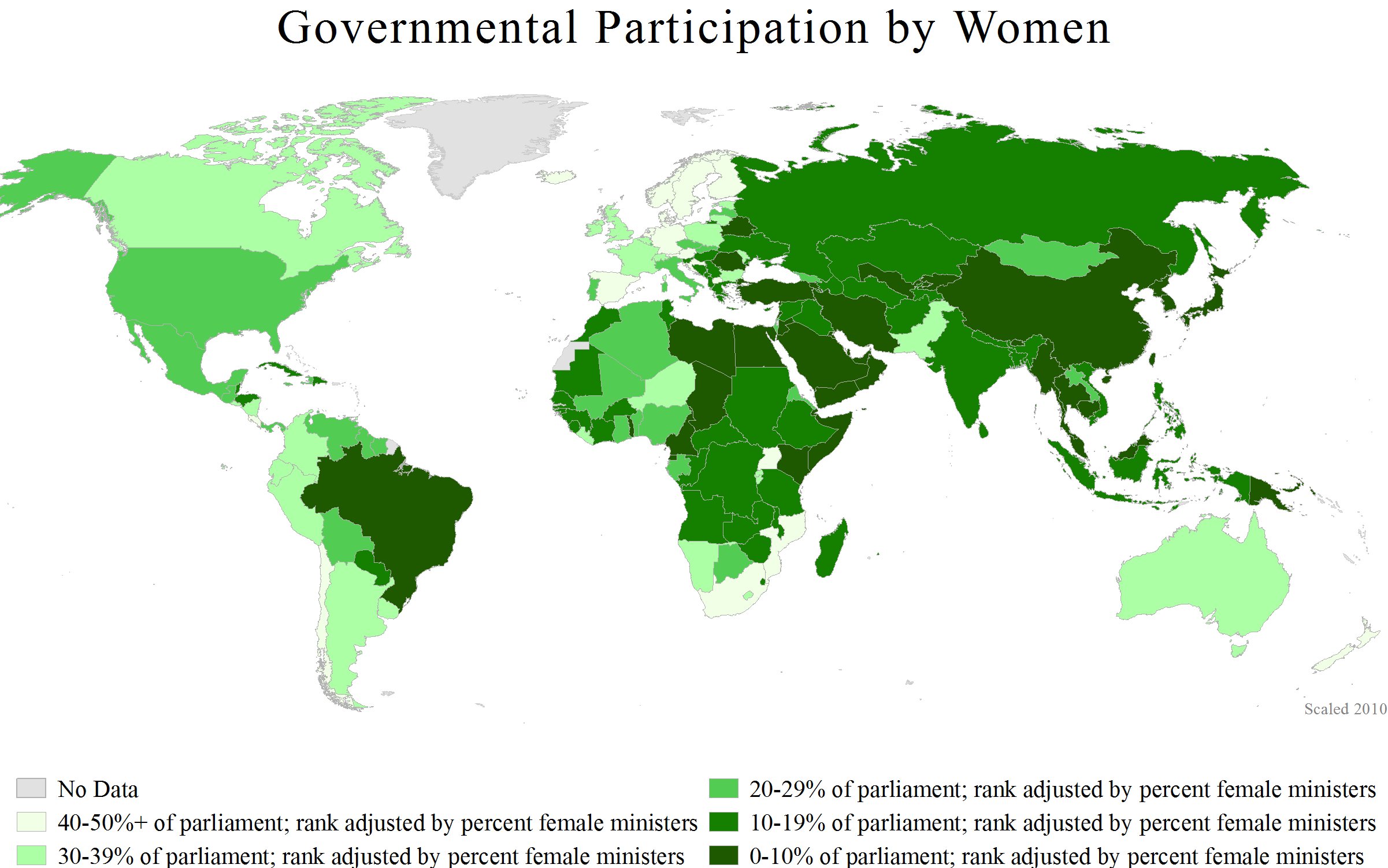
I will not celebrate because a higher percentage of the world’s poor are women and a very low percentage of the world’s rich are,
I will not celebrate as long as the phrase ‘She is someone’s wife/daughter/mother’ is used to justify shame – she is Someone;
As long as we need to have an International Women’s Day, there is no cause to celebrate it,

But I will pay tribute to all women around the world, who strive and strain, whose sweat feeds this world, whose blood gives it life,
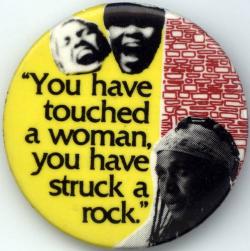
In tribute to them, in tribute to us all, the words from my heart, from the depths of my soul, at the top of my lungs, are the words of the women of South Africa who defied everyone singing:
"NOW YOU HAVE TOUCHED THE WOMEN YOU HAVE STRUCK A ROCK! YOU HAVE DISLODGED A BOULDER!! YOU WILL BE CRUSHED!!!


Monday, 15 December 2014

Goodluck V Buhari: Illusion of Choice, Stockholm Syndrome Democracy And The Futile Search For A Messiah

I would love to see Buhari win the general election. Don’t get me wrong. I do not like Buhari I also do not trust him as far any inclined person can throw him. However, 2 things possible outcomes to him winning the election obviously appeal to me. One, he could be as magnificient a leader as his blind followers hope he will be – that can only be good for Nigeria. Or he could be as horrible as I expect him to be and how I would love to laugh in some people’s faces. FYI, I am currently taking down names. Jokes aside, it is disheartening to see people missing the point. We are engaging with the process in the wrong way. Let me illustrate with the following points.

The Illusion of Choice
We have been conned to believing that we have a choice in our destiny. Either choose Goodluck or Buhari. Those are your choices. Nothing else. By inference one of them must be credible, right? We just have to be discerning and the gates of nirvana in Nigeria will open. I hear you. A choice between Buhari and Goodluck is like making a choice between being shot in the arm or the leg. All the arguments in support of either candidate are a perambulation on how we can do without one limb or the other. I wish we could envisage a situation where no shooting can occur. We need to be smarter in our engagement with the governance process and not wait for elections to pretend as if we have a choice.

Religion/Faith
Preoccupation with the candidates’ private religious practices is misguided, disingenuous and wrong. It is of absolutely no relevance whatsoever. I urge all Nigerians to desist from it. International media does not help by insisting Nigeria is divided by a Muslim north and Christian south, as if that has anything to do with governance, leadership and politics. As a Christian person myself, I don’t think faith has anything to do with someone’s ability to do a job right. That is all the presidency is, by the way, a salaried job. (More about that later). I can imagine going for a job interview and saying, ‘these are my qualifications, this is my requisite experience and oh! Furthermore, my being a Christian (or any other religion) trumps all of that.’ Then I sit back smugly and wait to be ushered into the job like a superstar! Hmmph! That is as ridiculous as it sounds. So stop it!

Democracy/Good governance
I am not a fan of democracy. I do not know anyone who truly is for all the hype it gets. Democracy is an ideology, a state of absolute bliss a condition of often unattainable perfection of governance. It relies on viable institutional structures, engaged populace, accountability and consequences for improper use of the power of the state and abrogating the desires of the people. The history of democracy indicates that any nation-state that adopted democracy successfully evolved into it. Modifications were made to adapt it to pre-existing governance structures. Any nation-state upon whom democracy was imposed (mostly post 1960) suffers from an incongruence between democracy and pre-existing governance structures and international political ideology. Democracy thrives in societies that are individualistic and causes conflicts in states that are communitarian in nature, because it attacks the fabric of community; just like adversarial systems of dispute resolution destroys relationships while conciliation repairs them. The Nigerian mentality sees democracy as a means to eat to the mystic ‘National Cake’ (which no person has bothered to prepare). Democracy in Nigeria is purposively appropriated by the political elite and used to empower politicians and not populations. It is the currency at which our oppression is bought.

The Search for a Messianic-Saviour Leader
One of the biggest mistakes we make in elections and our articulation of them is the search for someone, whose position in the presidential seat will be a cure for all the ills of the nation. The person the ‘cap fits’, the ‘solution to our problems’, the ‘only man for the job’ as if there was any such thing! Firstly, if 160 million corrupt people have a righteous leader the nation will be corrupt and no change will ensue. The leader is a fruit of our own poisonous practices, only when we fail to disobey ordinary laws, do not appropriate funds, do not use our office to benefit our own stomachs can we ask a president to do the same. Secondly, the presidency is a salaried position, no more, no less! A lot of the manifestoes out there fall short of a job description. As long as our politics lacks ideology, we will elect personalities that we know nothing of. I do not personally know Buhari or Goodluck, but a lot of the arguments I am hearing in support or detraction of either makes me think that maybe some people are living with these men without the knowledge of any one else. Politics should not be about ideology, but about policies on housing, education, immigration, economic resurgence, defence etc. not about who used to be Buhari’s driver, honestly I don’t care a fig for that!


Stockholm Syndrome Politics
‘Stockholm syndrome, or capture-bonding, is a psychological phenomenon in which hostages express empathy and sympathy and have positive feelings toward their captors, sometimes to the point of defending and identifying with the captors. These feelings are generally considered irrational in light of the danger or risk endured by the victims, who essentially mistake a lack of abuse from their captors for an act of kindness.’ [Source: Wikipedia] Sound familiar?

We have now, arrived at place in history that we believe that making the most of a bad situation is the only option. If we do not educate ourselves on the fallacies of the arguments placed before us, if we do not divorce ourselves from the groundless prejudices imposed upon us, if we do not learn our own history, if we do not take some responsibility for the governance of our country for our own sakes…then we are the clueless ones.