Ludicrously, we have made race into the dominant narrative of our time.
It is an ironic narrative, because it is rarely spoken.
But it lurks in the crannies of our minds,
In the corners of our eyes,
Feasting on all that is insidious in our souls,
Its scaly fingers holding us back from embracing our complete humanity,
Its scraggy feet trampling on all that is humane within us.
Generations from now, when they have all turned brown,
Our children will look at us with scorn and derision,
And ask 'How could they think that the skin corrupts the soul?'
'How could they think, that the land of birth, deters doing wonders on earth?'
'How did they come this far from reality?'
Thursday, 28 May 2015

Monday, 9 March 2015


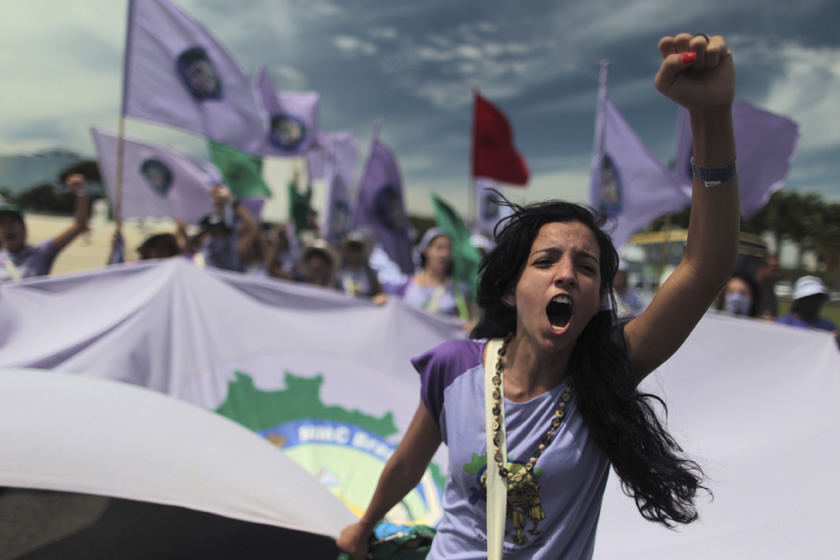

Why I Am Not Celebrating International Women’s Day 2015
On the 8th of March 2015 the world celebrated International
Women’s Day. I chose to mark the day rather than celebrate. ‘Why?’ you may well
ask. Here is my answer:
As long as women still have to justify their existence as
equal citizens of the world, I will not celebrate,
I will not celebrate till the Chibok girls are returned
alive or dead,
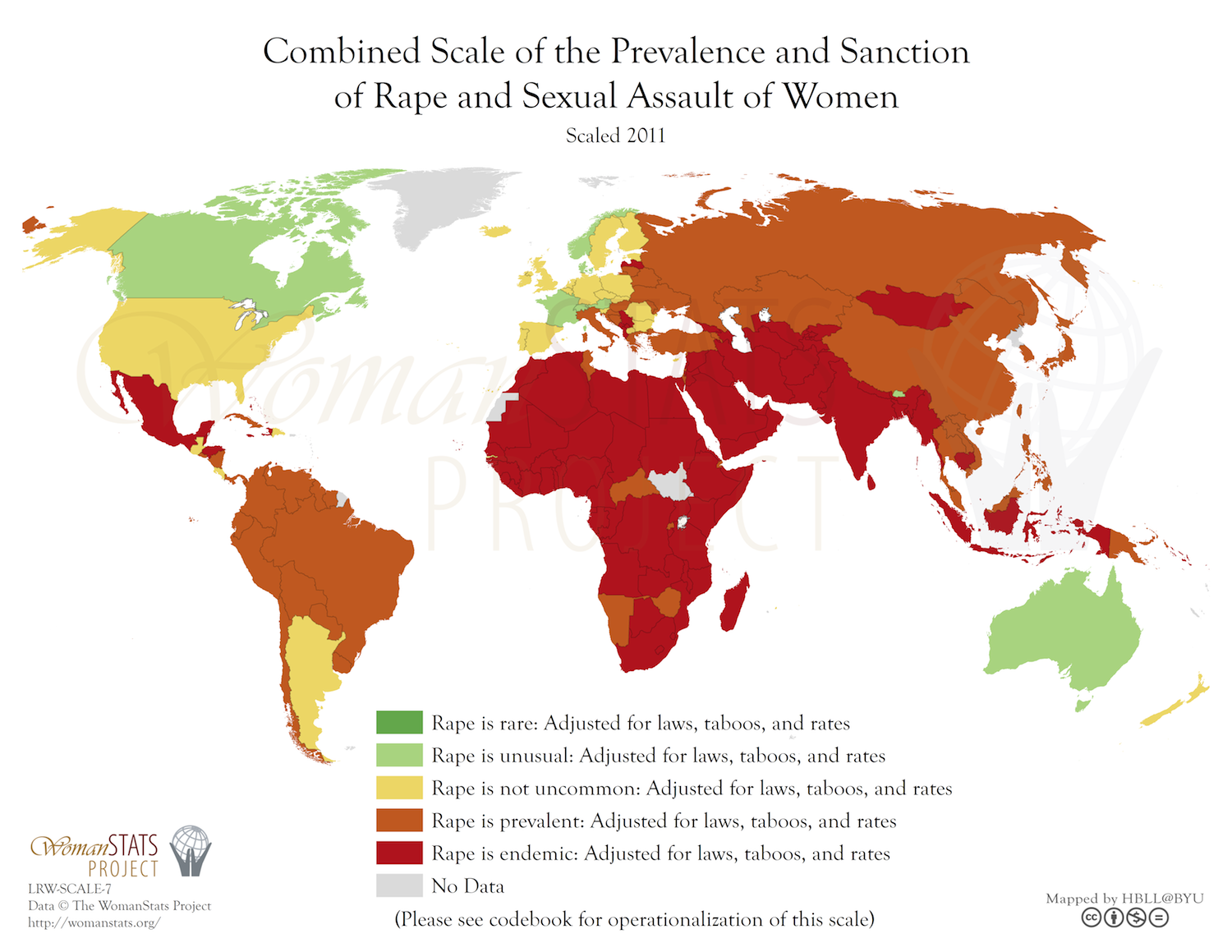
I will not celebrate while the rape of women is blamed on
women and ‘India’s Daughter’ is banned,
I will not celebrate as long as domestic abuse is rampant
and victim-blaming is ‘normal’,
I will not celebrate as long as red carpet events all over
the world are witness to inane, idiotic questions about fashion only directed
at women,
While men all similarly-dressed, higher paid are walk
alongside them,
I will not celebrate the fact that women are only judged by
their outward appearance and criticised when THEY focus solely on the outward,
I refuse to celebrate as long as women are not allowed to
control their bodies, or their bodies are treated as commodities, objectified,
I will not celebrate as long as ‘feminist’ is treated as a
dirty word,
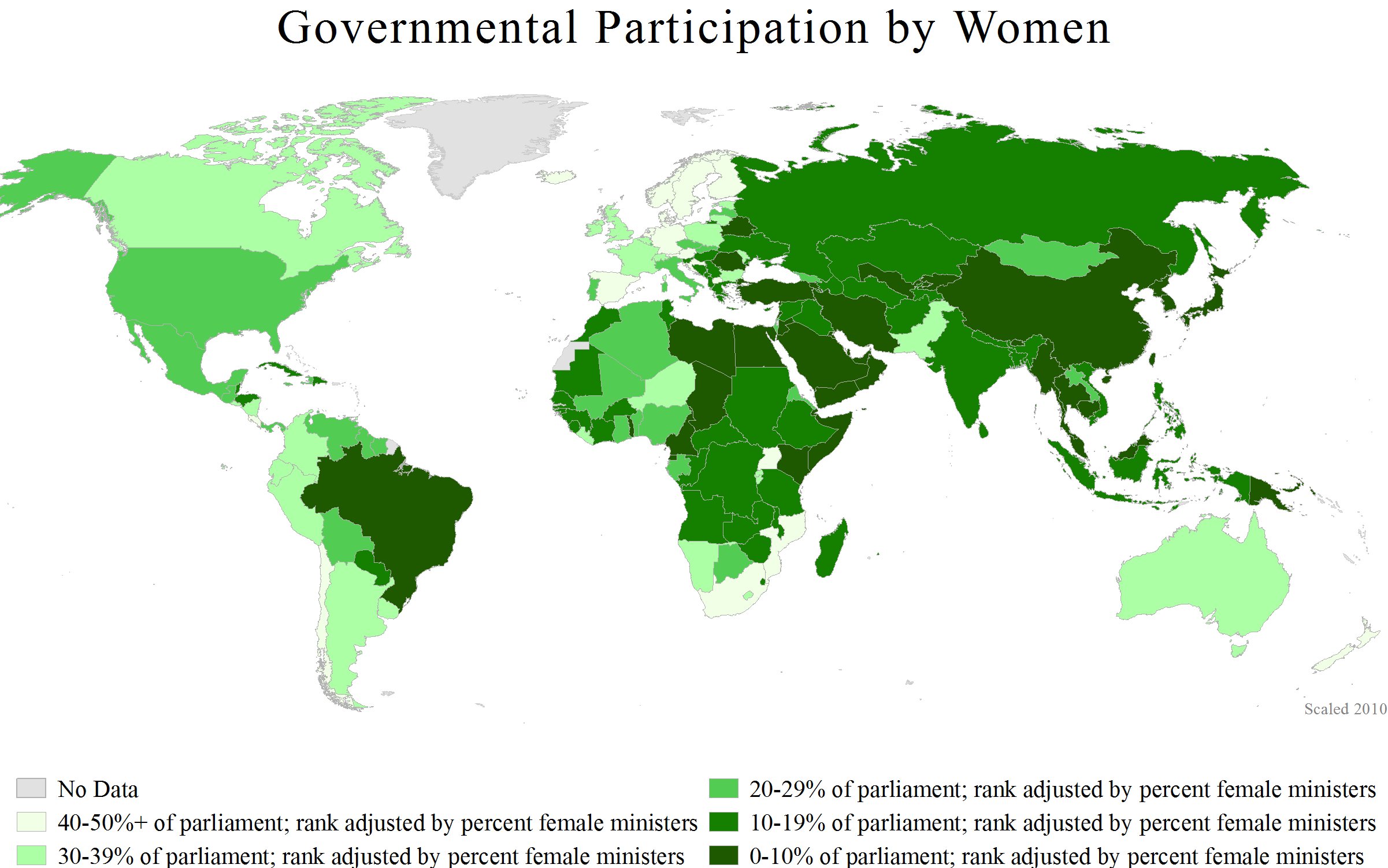
I will not celebrate because a higher percentage of the
world’s poor are women and a very low percentage of the world’s rich are,
I will not celebrate as long as the phrase ‘She is someone’s
wife/daughter/mother’ is used to justify shame – she is Someone;
As long as we need to have an International Women’s Day,
there is no cause to celebrate it,
But I will pay tribute to all women around the world, who
strive and strain, whose sweat feeds this world, whose blood gives it life,
In tribute to them, in tribute to us all, the words from my
heart, from the depths of my soul, at the top of my lungs, are the words of the
women of South Africa who defied everyone singing:
"NOW YOU HAVE TOUCHED THE WOMEN YOU HAVE
STRUCK A ROCK! YOU HAVE DISLODGED A BOULDER!! YOU WILL BE CRUSHED!!!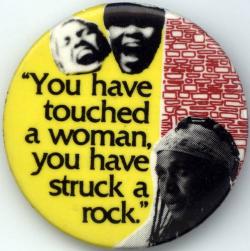


Monday, 15 December 2014
Goodluck V Buhari: Illusion of Choice, Stockholm Syndrome Democracy And The Futile Search For A Messiah
I would love to see Buhari win the general election. Don’t get me wrong. I do not like Buhari I also do not trust him as far any inclined person can throw him. However, 2 things possible outcomes to him winning the election obviously appeal to me. One, he could be as magnificient a leader as his blind followers hope he will be – that can only be good for Nigeria. Or he could be as horrible as I expect him to be and how I would love to laugh in some people’s faces. FYI, I am currently taking down names. Jokes aside, it is disheartening to see people missing the point. We are engaging with the process in the wrong way. Let me illustrate with the following points.
The Illusion of Choice
We have been conned to believing that we have a choice in our destiny. Either choose Goodluck or Buhari. Those are your choices. Nothing else. By inference one of them must be credible, right? We just have to be discerning and the gates of nirvana in Nigeria will open. I hear you. A choice between Buhari and Goodluck is like making a choice between being shot in the arm or the leg. All the arguments in support of either candidate are a perambulation on how we can do without one limb or the other. I wish we could envisage a situation where no shooting can occur. We need to be smarter in our engagement with the governance process and not wait for elections to pretend as if we have a choice.
Religion/Faith
Preoccupation with the candidates’ private religious practices is misguided, disingenuous and wrong. It is of absolutely no relevance whatsoever. I urge all Nigerians to desist from it. International media does not help by insisting Nigeria is divided by a Muslim north and Christian south, as if that has anything to do with governance, leadership and politics. As a Christian person myself, I don’t think faith has anything to do with someone’s ability to do a job right. That is all the presidency is, by the way, a salaried job. (More about that later). I can imagine going for a job interview and saying, ‘these are my qualifications, this is my requisite experience and oh! Furthermore, my being a Christian (or any other religion) trumps all of that.’ Then I sit back smugly and wait to be ushered into the job like a superstar! Hmmph! That is as ridiculous as it sounds. So stop it!
Democracy/Good governance
The Illusion of Choice
We have been conned to believing that we have a choice in our destiny. Either choose Goodluck or Buhari. Those are your choices. Nothing else. By inference one of them must be credible, right? We just have to be discerning and the gates of nirvana in Nigeria will open. I hear you. A choice between Buhari and Goodluck is like making a choice between being shot in the arm or the leg. All the arguments in support of either candidate are a perambulation on how we can do without one limb or the other. I wish we could envisage a situation where no shooting can occur. We need to be smarter in our engagement with the governance process and not wait for elections to pretend as if we have a choice.
Religion/Faith
Preoccupation with the candidates’ private religious practices is misguided, disingenuous and wrong. It is of absolutely no relevance whatsoever. I urge all Nigerians to desist from it. International media does not help by insisting Nigeria is divided by a Muslim north and Christian south, as if that has anything to do with governance, leadership and politics. As a Christian person myself, I don’t think faith has anything to do with someone’s ability to do a job right. That is all the presidency is, by the way, a salaried job. (More about that later). I can imagine going for a job interview and saying, ‘these are my qualifications, this is my requisite experience and oh! Furthermore, my being a Christian (or any other religion) trumps all of that.’ Then I sit back smugly and wait to be ushered into the job like a superstar! Hmmph! That is as ridiculous as it sounds. So stop it!
Democracy/Good governance
I am not a fan of democracy. I do not know anyone who truly is for all the hype it gets. Democracy is an ideology, a state of absolute bliss a condition of often unattainable perfection of governance. It relies on viable institutional structures, engaged populace, accountability and consequences for improper use of the power of the state and abrogating the desires of the people. The history of democracy indicates that any nation-state that adopted democracy successfully evolved into it. Modifications were made to adapt it to pre-existing governance structures. Any nation-state upon whom democracy was imposed (mostly post 1960) suffers from an incongruence between democracy and pre-existing governance structures and international political ideology. Democracy thrives in societies that are individualistic and causes conflicts in states that are communitarian in nature, because it attacks the fabric of community; just like adversarial systems of dispute resolution destroys relationships while conciliation repairs them. The Nigerian mentality sees democracy as a means to eat to the mystic ‘National Cake’ (which no person has bothered to prepare). Democracy in Nigeria is purposively appropriated by the political elite and used to empower politicians and not populations. It is the currency at which our oppression is bought.
The Search for a Messianic-Saviour Leader
One of the biggest mistakes we make in elections and our articulation of them is the search for someone, whose position in the presidential seat will be a cure for all the ills of the nation. The person the ‘cap fits’, the ‘solution to our problems’, the ‘only man for the job’ as if there was any such thing! Firstly, if 160 million corrupt people have a righteous leader the nation will be corrupt and no change will ensue. The leader is a fruit of our own poisonous practices, only when we fail to disobey ordinary laws, do not appropriate funds, do not use our office to benefit our own stomachs can we ask a president to do the same. Secondly, the presidency is a salaried position, no more, no less! A lot of the manifestoes out there fall short of a job description. As long as our politics lacks ideology, we will elect personalities that we know nothing of. I do not personally know Buhari or Goodluck, but a lot of the arguments I am hearing in support or detraction of either makes me think that maybe some people are living with these men without the knowledge of any one else. Politics should not be about ideology, but about policies on housing, education, immigration, economic resurgence, defence etc. not about who used to be Buhari’s driver, honestly I don’t care a fig for that!
Stockholm Syndrome Politics
‘Stockholm syndrome, or capture-bonding, is a psychological phenomenon in which hostages express empathy and sympathy and have positive feelings toward their captors, sometimes to the point of defending and identifying with the captors. These feelings are generally considered irrational in light of the danger or risk endured by the victims, who essentially mistake a lack of abuse from their captors for an act of kindness.’ [Source: Wikipedia] Sound familiar?
We have now, arrived at place in history that we believe that making the most of a bad situation is the only option. If we do not educate ourselves on the fallacies of the arguments placed before us, if we do not divorce ourselves from the groundless prejudices imposed upon us, if we do not learn our own history, if we do not take some responsibility for the governance of our country for our own sakes…then we are the clueless ones.
The Search for a Messianic-Saviour Leader
One of the biggest mistakes we make in elections and our articulation of them is the search for someone, whose position in the presidential seat will be a cure for all the ills of the nation. The person the ‘cap fits’, the ‘solution to our problems’, the ‘only man for the job’ as if there was any such thing! Firstly, if 160 million corrupt people have a righteous leader the nation will be corrupt and no change will ensue. The leader is a fruit of our own poisonous practices, only when we fail to disobey ordinary laws, do not appropriate funds, do not use our office to benefit our own stomachs can we ask a president to do the same. Secondly, the presidency is a salaried position, no more, no less! A lot of the manifestoes out there fall short of a job description. As long as our politics lacks ideology, we will elect personalities that we know nothing of. I do not personally know Buhari or Goodluck, but a lot of the arguments I am hearing in support or detraction of either makes me think that maybe some people are living with these men without the knowledge of any one else. Politics should not be about ideology, but about policies on housing, education, immigration, economic resurgence, defence etc. not about who used to be Buhari’s driver, honestly I don’t care a fig for that!
Stockholm Syndrome Politics
‘Stockholm syndrome, or capture-bonding, is a psychological phenomenon in which hostages express empathy and sympathy and have positive feelings toward their captors, sometimes to the point of defending and identifying with the captors. These feelings are generally considered irrational in light of the danger or risk endured by the victims, who essentially mistake a lack of abuse from their captors for an act of kindness.’ [Source: Wikipedia] Sound familiar?
We have now, arrived at place in history that we believe that making the most of a bad situation is the only option. If we do not educate ourselves on the fallacies of the arguments placed before us, if we do not divorce ourselves from the groundless prejudices imposed upon us, if we do not learn our own history, if we do not take some responsibility for the governance of our country for our own sakes…then we are the clueless ones.
Friday, 17 October 2014
Ebola and R2P; Africa and the International Community: 5 Definite Lessons from the Ebola Crisis
I feel exceptionally well placed to
write this piece. My Ph.D thesis was titled ‘R2P and the Responsibility to
Prevent: A Legitimate and Structural Framework for an International
Non-Military Responsibility to Prevent Mass Atrocity and Internal Conflict in
West Africa.’ In my thesis I focused on the preventive arm of the
responsibility to protect (R2P) and human rights violations, to emphasise the
range of potential international responses to the crimes of R2P and systematic
human rights violations that are available to the international community. However,
one of the main aims of that thesis was to examine the tension between
detrimental involvement by the international community in the internal affairs
of states, on the one hand, and the responsibility which the international
community may have in preventing human suffering in such states on the other. Therefore,
I examined the interplay between national and international obligation,
especially the obligation of the ever-elusive ‘international community.’
In April 2014, the first cases of
Ebola were brought to international attention. The outbreak started in Guinea,
but quickly spread to Liberia and Sierra Leone with isolated cases in
neighbouring Senegal and a transported outbreak in Nigeria. Without a hashtag
to cling to or an ice bucket challenge to surmount, the world largely ignored
the outbreak. It was not till selfless American and British aid workers, who contacted
the deadly virus, were flown to their respective homelands for treatment, that
the mass hysteria of an imminent biological apocalypse caused several
governments around the world (outside West Africa) to begin to consider what
they may do to avoid the virus killing their own citizens. Nevertheless, by
October 2014 infections had occurred in the US and Spain. There are various
lessons which I would like to point out from the foregoing.
1.
The international community is pure
fiction. While the phrase ‘international community’ is used to imply a common
point of view, that commonality is almost always overshadowed by personal and
political self-interest. The UN and WHO, both seen as evidence of the existence
of an international community, have barely managed to get a handle on the
crisis. The crisis could have been contained with adequate readiness by a
cohesive international community in April 2014, but the lack of such a
community has resulted in unnecessary loss of life and increasing expenditure.
There is also no anticipated ended to this current outbreak. http://www.bbc.co.uk/news/world-africa-29654974.
Over 4 000 people have died and the WHO thinks the numbers may rise to 10000
before it is contained. Lesson one: Relying on the international community is
like sitting on a chair made of tissue paper, it will let you down.
2.
R2P is severely handicapped by a
non-existent international community. The core of the responsibility to protect
(R2P) is simply encapsulated in this statement ‘Where a population is suffering serious harm, as a result of internal war, insurgency, repression or
state failure, and the state in
question is unwilling or unable to halt or avert it, the principle of
non-intervention yields to the international responsibility to protect.’[1]
The responsibility to protect is divided into 3 parts; a responsibility to
prevent, a responsibility to react, and a responsibility to rebuild. The vision
of the architects of R2P clearly covers a situation such as the current Ebola
outbreak, where populations in West Africa are suffering serious harm, and the
states concerned are unable to prevent it. The international responsibility to
protect cannot be fulfilled if there is no international community to bear such
a responsibility. This is more so as regards the first part of the continuum,
i.e. the responsibility to prevent. Lesson two – R2P without a functional
international community is like a toothbrush with no bristles, completely
redundant.
3.
If the international community is to be
built, it should start from a sense of human oneness. Our understanding of
community is based on the fictional presumption of shared values. These shared
values rarely result in shared action unless, shared interests are at stake.
This is exhibited in continuing multilateral military action in the Middle-East
and inaction or delayed reaction to Ebola in West Africa. Concepts such as
universal human rights will not gain any traction till we see the human race as
one. When we do not need to appeal to people to imagine someone dying is
someone we know, when the basic fact of their humanity will suffice to ignite
our compassion, when all life has equal value, then we will have an
international community. The existence of an international community does not
require more resources, the world has enough, though unevenly distributed. The
international community requires more humanity, not values nor interest, but
compassion and human kindness, not rhetoric or bombast, but consistent acts of
benevolence. Lesson three – calling the international community a community without
any sense of communion is like calling a cactus plant a rose bush, placing it in your
parlour and hoping the fragrance will adorn the premises.
4.
Africa must look to herself. Now more
than ever, Africa, especially sub-Saharan Africa, must realise that
self-sufficiency is required. Aid has solved no problems, interventions have
probably done more harm than good, and the recommendation of constant
elections, have become a smoke-screen for undemocratic democracies. Both
Liberia and Sierra Leone are unable to handle the current Ebola outbreak due to
the lack of manpower and infrastructure that have resulted from sustained yet
preventable conflict (I suggest you read my thesis, its only about 99,000 words long give or take a few hundred). In contrast ever-tense
Nigeria, and sporadic-conflict-hit Senegal contained Ebola WITHOUT ANY EXTERNAL
HELP. Imagine if those states were more functional. A cure would have been
found a long time ago. If you can
contain Ebola, you can build up economies live in peace and achieve mastery of
geographical space. Look to yourselves, adopt your own solutions, do good to
all men. Lesson 4 – if a man lives at the bottom of a hill, during the flood,
he should be the first to build flood barrier. Nevertheless, the fellow at the
top of the hill who thinks he is safe, has no way of escape.
5.
We are one world, one human race. “The world has become like a drum – if hit
on one end, the whole thing will vibrate.” We need to desist from alterity,
stop playing the ‘us’ and ‘them’ game. I am you and you are me. They are us,
and we are them. Lesson 5 – Different colours, shapes and sizes, different
creeds, ideologies and religions – but we breathe in the same air, walk on the
same planet, lie under the same stars and Ebola can kill us all.
[1] ICISS (2001) The Responsibility to Protect.
Report of the International Commission on Intervention and State Sovereignty.
xi, emphasis mine.
Wednesday, 1 October 2014
Who are we?
The everlasting conundrum of the people called Nigerians has
raised up such phrases like “geographical expression”, “geographical entity”, “artificial
creation”, “colonial creation.” Are we a state in the true meaning of the word
state? Hobbes theorised that a state is created to bring and end to the anarchy
or individualised existence and Locke proposed that the creation of state was
for the protection of life and property. We all know that this does not apply
to Naija.
Naija was created out of the consolidation of British ‘real
estate’ adjacent to the river Niger .
It was named by the lightskirt, and later wife of the ‘estate-manager’ of the
real estate. It was never administered as a state but as a well-spring of
resources to a greedy eyed empire. It only became a state at the end of
colonialism because the US
was throwing its weight around (what’s new?) and insisted on states being
created as opposed to a return to status quo ante of the real estate.
54 years after ‘independence’ (supposedly we are
independent) we still have no conception of who we are. This has been further
obscured by irresponsible leadership, selfish international influence and
apathetic ‘citizenship’. (can we call ourselves citizens if we do not belong to
a state stricto sensu?) In 1966, the talented Mr. Peter Enahoro wrote a book
titled “How to be a Nigerian” which
while being comical and insightful managed to capture the essence of the
southern-most part of Nigeria
alone. Our 3 main languages are a great insult to over 500 languages spoken by
ethnic Nigerians, which are slowly dying out in favour of those 3. The supposed
main tribes of Nigeria
are minor compared to the 400 others which nobody cares to know about. How can
we be Nigeria when we do not
know what Nigeria
is?
We have had a state imposed on us, leaders imposed on us,
languages imposed on us, a way of life imposed on us. At over 50 years we are
reminiscent of a retarded vegetable, who will never answer to his name, we are
abandoned, despised a paraplegic parasite, constantly soiling himself. A
deranged billy-goat meekly being led to the slaughter while frantically
bleating out the name of its ancestors. Now more than ever before, we need to
take this moment in time, and the first time in history decide our future;
throw of our chains; refuse to be led by morons. Now more than ever before, we
have to find Nigeria
and then find our way home, wherever home may be. For our children... for their future...
Personal Legal explanation of Oscar Pistorius Verdict
Here is my considered legal
opinion to the reaction on the verdict in the Oscar Pistorious case. (Which we
will all have forgotten about next week). I hope anyone reading will approach
with an open mind...
It is for the prosecution to
prove that OP is guilty and not for OP to prove that he is innocent,
furthermore, we do not have all the evidence before us, but a summary distilled
for us by a biased media.
So first we have the physical act
of killing which has to be proved beyond reasonable doubt (BRD) this was not
disputed by the defence. Second we have causation. i.e. did the act of the
defendant OP cause the death of the Reeva? That was not also in dispute.
To sustain a conviction you have
to prove BRD that the above happened while the defendant had the intention to
kill or cause grievous bodily harm (GBH) to R or another. The intention is not
diluted by the intention to kill or cause GBH being directed to another. This
is where I think the prosecution did not exercise diligent prosecution by
trying to prove and 'either or' case. They tried to prove that OP had intention
to either kill R in a fit of rage OR kill an intruder with intent.
What this means for the standard
of proof is that each alternative weakens the proof of the other alternative.
Let me illustrate. Did the
prosecution prove BRD that OP killed R with the requisite intent? No, because
they suggest that he may have been aiming to kill an intruder. So intent is not
proved BRD.
Did the prosecution prove BRD
that OP intended to kill an intruder with the requisite intent? No, because
they maintain that he may have had intent to kill R.
By maintaining both alternatives
could have happened the prosecution introduced reasonable doubt that either
alternative happened. I believe they intended to prove the OP killed R with
intent, but while they were still sub judice (course of trial) they realised
their evidence will not suffice for proof BRD. Had they evaluated their
evidence properly BEFORE trial they should have gone with the second
alternative.
Mistaken identity does not dilute
intent. Thus if A intended to kill B but killed C, subject to the actus reus
being proved, A will still be guilty of murder.
The difficulty in proving the
mental element or mens rea of murder is why there is a whole raft of other
convictions available for unlawful killing which give the judges the discretion
to sentence relative to the seriousness of the crime, taking into account the
purposes of the legal system in its penal regime.
The judgement is not that OP did
not kill R. the judgment is that the prosecution has not proven OP guilty of
murder - murder is a technical term having strict legal definition as is
culpable homicide.
Judicial interpretation Oscar
killed Reeva (caused her death), but he did not murder her. He was negligent in
his actions which fell short of that of a reasonable person and thus caused her
death.
Subscribe to:
Posts (Atom)